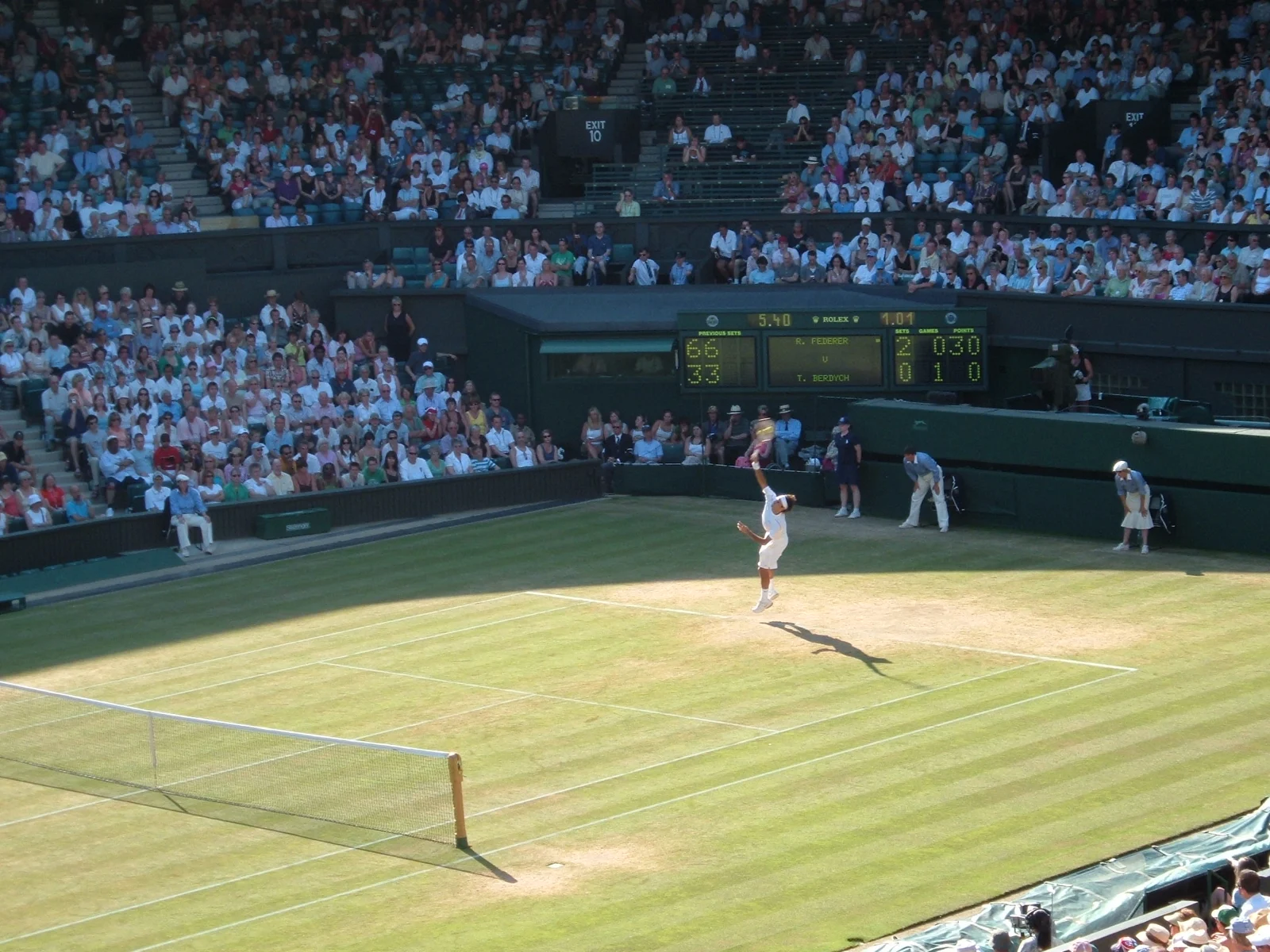
Roger Federer won twenty Grand Slam singles titles, nineteen of them on grass and hard courts and only one on clay.
He reached five Roland-Garros finals, so he could clearly play on clay, even if his results were far stronger elsewhere.
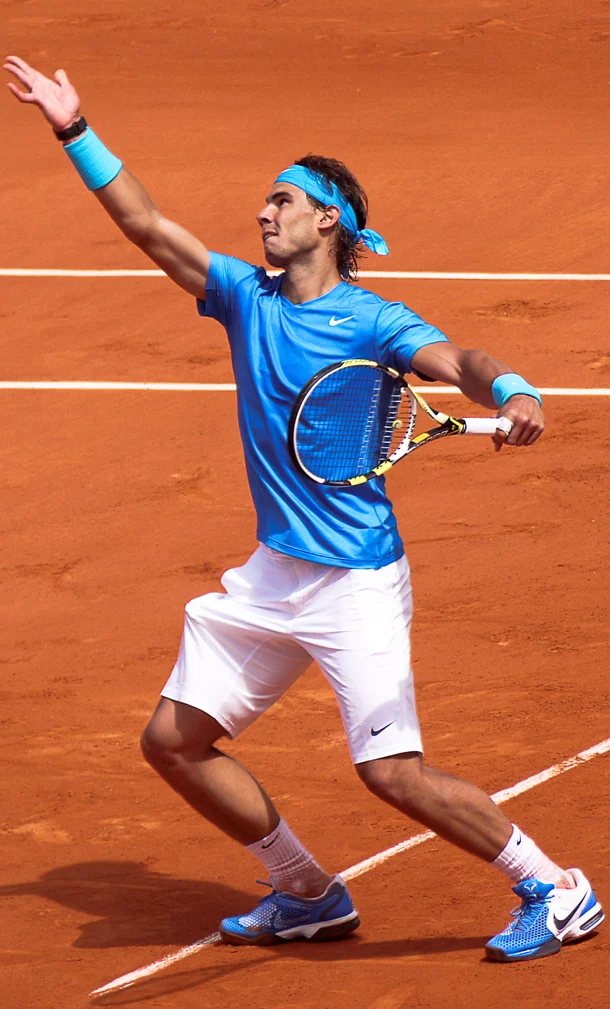
Federer's game was built around his serve, timing and ability to take the ball early, ending points before they got messy. Grass and hard courts gave him more opportunities to do that. On clay, the serve mattered less and rallies lasted longer, so the match asked for a different kind of patience.
People do the same thing in careers, markets, businesses and relationships, spending years adapting to conditions that never suited them. Leaving feels like failure, so they keep trying to make it work long after they have enough evidence to question the fit.
Some games are mathematically ugly from the start.
In roulette and lotteries, the math is against you before the first move, and the more you play, the more chances the house edge has to take its cut.
A casino can afford to lose a few rounds as long as you keep playing. A broker can keep collecting fees while your account shrinks, so keeping it alive is still your problem.
A short run of good outcomes can make luck feel like a method, which is part of what keeps people coming back. The roulette player knows the odds are bad and still spins, just as a new trader knows a position can go against him and still sizes it too large. A poker player with two outs left can usually find a reason to call if he wants one badly enough.
A first win becomes dangerous when a single result starts to feel like proof that you know what you're doing.
Without real risk controls, you can break every rule and still make money for three weeks if the market is forgiving. The P&L starts validating behavior that should have been killed immediately, and you have less reason to question it while the account keeps growing.
The worst version is a winning trade that came from oversizing, revenge trading or entering with no criteria because price happened to bail you out. After enough of those wins, the habits start to feel earned, and you carry them into a market that will no longer pay for them.
Illustrative: short-term results can reward a deteriorating process
Smoking offers a familiar example of the same trap. One cigarette after months away can feel too small to matter, even though it may restart a habit you worked hard to break. In trading and poker, tilt can pull you back into behavior you thought you had under control.
The same problem shows up outside markets.
Diego thinks enough effort can fix a bad fit.
Diego gets into a relationship with Catalina despite already knowing that he cannot live with her outbursts, volatility and refusal to grow up. The attraction is strong and he loves the good weeks, so he decides that enough patience and the right approach will fix the rest.
As Diego starts adapting, Catalina occasionally gives him a clean week, a real apology or something unexpectedly thoughtful. That good stretch is enough for him to mentally reprice everything that came before it and give the relationship another chance.
It works like a single big win at the table, where one result feels so good that the rest of the sample suddenly matters less.
Catalina can simply be herself and still be a bad fit for Diego, who is spending his time trying to renegotiate rules he knew he disliked from the start.
Being inside the relationship makes it harder for him to judge what is happening because every good week feels like new evidence. A friend watching from the outside would probably recognize the pattern much earlier.
Optimization can be a very respectable form of denial.
Alejandro wants to become a profitable trader, so he studies a strategy, backtests it and watches hours of explanation before funding an account that he blows up within a week.
At first he admits that he oversized, revenge-traded, fought the trend and broke his own criteria. Once that becomes uncomfortable, he decides the strategy was wrong and starts learning another one.
Hunting for a new approach takes pressure off the ego because “I'm testing a concept and gathering data” sounds much better than “I'm losing money.” The loop can run for years, with each loss giving him another reason to restart.
Some people use university in much the same way, buying a few more structured years before anyone demands a firm answer about what comes next. Education has plenty of value, but staying in preparation mode can also feel safer than being judged on results.
If you keep oversizing after losses, breaking your criteria under FOMO, moving stops and chasing recovery through five different systems, the common variable is you.
P&L usually tells you late.
The annoying part is that a bad fit and a bad streak can look almost identical while you are going through them.
Three blown accounts can be inexperience or a warning that trading is the wrong game. Two flat years at a company can be a temporary plateau or the wrong career. Four relationships ending the same way can still be bad luck, but at some point the selection pattern deserves a look.
Outcomes often take too long to tell you what is happening. Markets can turn before the macro data catches up, and a poker player can spend months winning while playing badly. A business can lose its audience before the revenue line shows it, much as a relationship can be effectively over long before anyone says it out loud.
To judge what is happening before the results catch up, you need to look at the work itself and the mistakes you keep making.
Is the work getting you anywhere?
Predisposition
Some games reward patience, speed, memory, tolerance for uncertainty or an ability to see patterns quickly. You should be able to name what comes unusually naturally to you and explain how the work makes use of it.
Environment
Market access, timezone, capital, tools, mentors and the people around you affect how much you can do with your abilities. Consider how often your setup lets you use what you are good at and how much of the day you spend fighting it.
Nature of your mistakes
Making new mistakes is part of learning, but repeating one you already understand deserves more attention. If the same behavior keeps returning under pressure, another book or course probably will not fix much, especially when all you are getting better at is explaining it.
The routine
Most of trading is waiting, reviewing, logging and executing, with plenty of time spent doing nothing. You can find that routine boring and still be good at it, but having to drag yourself through the basics every day is worth taking seriously.
Pattern recognition
With enough useful practice, familiar situations should become easier to read without rebuilding every decision from scratch. What people call intuition usually comes from recognizing something they have worked through before.
If you are still unsure, try different versions of the game and keep notes on what actually improves. A method can look sophisticated and get you nowhere, so judge it by whether you can keep making progress without exhausting your time, money or patience.
Balanced is overrated.
School teaches you to see an A in mathematics and a C in literature as a reason to hire a literature tutor. Outside school, spending most of your effort on your weakest subject can be a terrible use of time.
A writer with unusually good ideas and a strong voice can hire a video editor, just as a product founder can hire a designer. A patient trader gains very little from forcing himself into mediocre scalping because somebody else's screenshots look exciting.
A partner, a hire, software or automation can often handle a weak point more cheaply than you can fix it yourself. Trying to become good at everything takes time away from the work where you already have an advantage.
If the ideas and the voice are the edge, hand off the edit and go make the next thing.
Once you find work that suits you, you still have to stay with it long enough to get somewhere.
There will always be a new trading concept, a cleaner business model or a market where everyone on your feed seems to be making money faster than you. You are comparing their best results with your ordinary Tuesday afternoon, which is rarely a fair comparison.
A trader can take drawdowns and a creator can get tired even when the work suits them. Healthy relationships still involve boring logistics, and plenty of days will be tedious wherever you end up. What matters is whether the effort is getting you somewhere over time.
Federer kept playing on clay, but his record makes it clear how much the conditions mattered. It is worth taking yours seriously before you spend another year blaming your effort.
The record
Federer’s titles and Roland-Garros results: Roland-Garros ↗. Diego, Catalina and Alejandro are illustrative characters.
Photos: Federer, Clavecin · public domain ↗ · Nadal, Yann Caradec, cropped by Domaina ↗ · CC BY-SA 2.0 ↗